
The most devastating haiku
And a small introduction to kigo

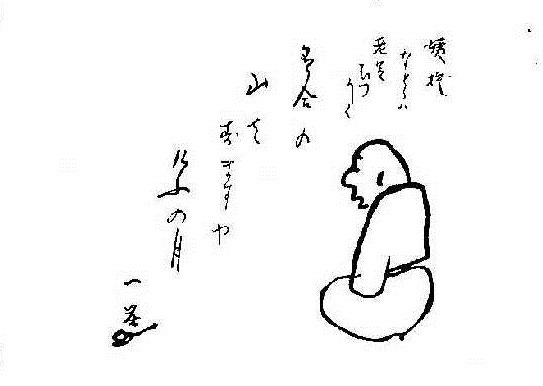
Limited space within a poem is often seen as merely limiting; however, there are many times when the lack is actually a gift. When it comes to haiku, four poets are often considered the great masters: Matsuo Bashō, Yosa Buson, Kobayashi Issa, and Masaoka Shiki. These poets helped refine and shape the haiku tradition, which is commonly structured in a 5-7-5 rhythm.
Traditionally, haiku focus on nature and fleeting moments of everyday life. They are deeply seasonal, and many include a kigo, a word that signals the time of year. Collections of these seasonal words are compiled in reference books called saijiki, which function like seasonal dictionaries for poets. Each season is then divided into early (初), mid (仲), and late (晩) periods. In kigo, there are the standard four seasons, but the New Year is seen as a fifth. For example, Scarecrow (Kakashi) immediately tells the reader it is autumn without using extra syllables to describe the season. This is a famous poem by Bashō:
An old silent pond
A frog jumps into the pond—
splash! Silence again.
The mention of a frog signals that the poem takes place in spring, since frogs are a traditional spring kigo. The inclusion of ‘frog’ tells the reader that it was a warm spring night, and the frogs were ribbiting with a single word. Kigo depicts weather, plants, and temperature in single words. Mosquito net (kaya) is used to indicate summer and gives the reader a sense of humidity and buzzing insects. You can view the full 500-word dictionary here.
As there is limited space, its use needs to be clever. Think of it as furnishing a studio apartment. Every decision needs to be deliberate and thought through. The lack of space doesn’t mean that you can’t do something beautiful; it instead forces you to pay attention and put an urgency on each word choice.
Below is one of the most devastating poems wrapped in beauty by Kobayashi Issa. The word tsuyu means world of dew, which is a distinctly Buddhist concept. Drops of dew symbolise human life and the fleeting nature of it.
Original
露の世は
露の世ながら
さりながら
Romanization
Tsuyu no yo wa
tsuyu no yo nagara
sari nagara
Translation
This world of dew
is a world of dew —
and yet… and yet…
It requires a little backstory to fully grasp the devastation. In its simple form, it is saying that the world goes on no matter what happens. Even in a dystopian landscape, the world is still continuing. The tragic life of the author includes him witnessing his mother’s passing at two years old, having to nurse his father through death, and experiencing his first son pass away after only a month. His second son died even sooner. His third child was a daughter who survived only a year before contracting smallpox. The third son suffered the same fate, and then, during the birth of the fourth, his wife died. The fourth son would only live through his infant years. The end of his misfortune doesn’t end there, yet despite all of this hardship, Issa kept writing haiku. The above haiku is about the death of one of his children and acknowledges the temporary nature of living while simultaneously admitting it doesn’t make it easier.
Although Issa remains a poet and continues writing about the nature of the world, it doesn’t mean nature isn’t cruel sometimes. It displays a great resilience to continue writing through such times. We are all temporary, and despite that being a fact, it doesn’t make our leaving hurt less for those that we love. Issa also wrote this about their child with smallpox
After two or three days, however, her blisters dried up and the scabs began to fall away — like a hard crust of dirt that has been softened by melting snow. In our joy we made what we call a ‘priest in a straw robe.’ We poured hot wine ceremoniously over his body, and packed him and the god of smallpox off together. Yet our hopes proved to be vain. She grew weaker and weaker and finally, on the twenty-first of June, as the morning glories were just closing their flowers, she closed her eyes forever. Her mother embraced the cold body and cried bitterly. For myself, I knew well it was no use to cry, that water once flown past the bridge does not return, and blossoms that are scattered are gone beyond recall. Yet try as I would, I could not, simply could not, cut the binding cord of human love.
The heavy topic and the agony he must have felt did not deter him from writing something truly poetic. It seems oftentimes that grief and heartbreak are also seasons poets thrive in. More on this next week, but for now, take a look at some more haikus from the masters and read the backstories. There are some incredible stories linked to traditional haiku. Here are a couple more by Issa to close us out this week. Tell me below what they mean to you. Keep kind and stay true, Woofenberry’s.
In this world
we walk on the roof of hell,
gazing at flowers.
The fly I swat
is the same fly
that keeps me company.
Bonus fact: Issa wrote 54 haiku on the snail, 15 on the toad, nearly 200 on frogs, about 230 on the firefly, more than 150 on the mosquito, 90 on flies, over 100 on fleas, and nearly 90 on the cicada
This is a brilliant porthole to a whole world I've only just begun to gaze on. Thank you